Australia Weather News
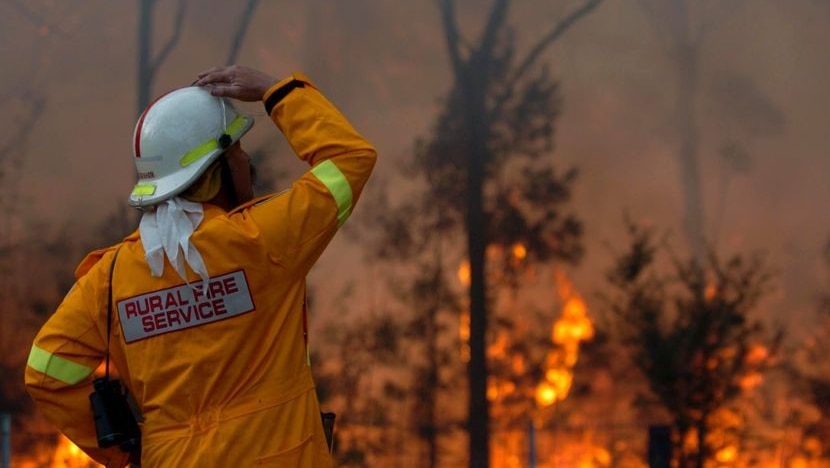
Bushfires could cost Australia almost $182 billion over the next three decades. (ABC News)
As Australians prepare for a summer influenced by what is likely to become the strongest El Niño on record, a new report reveals billions of dollars are being spent tackling bushfire seasons supercharged by climate change.
The modelling, commissioned by Emergency Leaders for Climate Action (ELCA), found the country's fire seasons have lengthened by 21 per cent since 1979 due to warming global temperatures.
The longer seasons will cost the Australian economy $6 billion each year over the next 30 years, with a majority being spent on harm to health and wellbeing, ahead of damaged businesses and lost homes.
[TABLE: Share of money spent on bushfire recovery]ELCA's Greg Mullins, a former Fire and Rescue NSW commissioner, said the high costs come as climate change, driven by the burning of fossil fuels, squeezes fire seasons closer together.
"The fire seasons are longer, they're overlapping between states and we're getting catastrophic fire weather," he said.
"Previous studies only looked at insured costs, which were far less, but costs across the economy are huge; in 30 years that's $180 billion."
Black Summer highlights cost of extreme fires
The ELCA report found half of Australian households are exposed to some bushfire risk, at 5.6 million, while major events, such as the Black Summer fires, cost almost $30 billion. And between 2003 and 2020 more than a million Australians had lived in a home within one kilometre of an active fire front.
The 2019/20 bushfires tore through about 45 per cent of the Snowy Valleys Council (SVC) local government area (LGA), killing one person and destroying almost 200 homes.
There were almost 9,000 livestock fatalities within the LGA and 400,000 hectares of land burnt.
The local council spent more than $50 million on direct recovery, which included road repairs and managing damaged and fallen trees.
SVC's manager of technical services, Glen McGrath, said the region was still recovering from the event more than six years later.
"You look at the softwood industry, they had a very large impact and it takes 20-plus years for softwood or pine tree to grow and be harvested and processed through the local industry processes, so they won't be coming back online until 2040 or thereabouts," he said.
"There's still a number of houses that weren't rebuilt after the fire, so there's widespread impacts and recovery efforts still."
Research has found the Black Summer bushfires cost Australia's tourism industry almost $3b, while the Insurance Council has found the event accounts for about $2b of the $2.58b in bushfire claims since 2019.
Preparation key ahead of high-risk summers
While no two events are the same, El Niño often brings hotter and drier conditions to southern and eastern parts of Australia.
Despite 2026 shaping up to become Australia's wettest El Niño year on record, drier than average conditions are starting to persist across parts of the country's east.
"In the last three months since El Niño has been active, we've seen drier-than-average conditions along much of the eastern seaboard," senior climatologist at the Bureau of Meteorology Felicity Gamble said.
"Extending from central Queensland through to south-east Queensland, down the New South Wales eastern seaboard and across southern Victoria and Tasmania."
There are concerns that unusually hot temperatures, combined with an increase in baseline warming due to climate change, could increase the risk of "flash droughts" this summer.
"When we get heatwaves, vegetation gives up its moisture very quickly … so things can very quickly turn into drought-like conditions and that drives fires," Mr Mullins said.
"All you need then is wind and you can have catastrophic fires."
Given the typical "lag effect" seen during an El Niño, there is speculation next year could become the hottest on record globally, leading to a particularly bad fire season in 2027/28.
But the ELCA report also found that better protecting infrastructure and homes could avoid $600m in bushfire losses and protect more than 5,600 jobs each year.
"The federal government has a Disaster Ready Fund, it's invested hundreds of millions over the last few years, which is great, but it needs to be targeted to help households," Mr Mullins said.
"For example, bringing their homes up to bushfire standards so that they'll withstand fire, making sure that communities still have the electricity on and have communications after a fire."
ABC