Australia Weather News
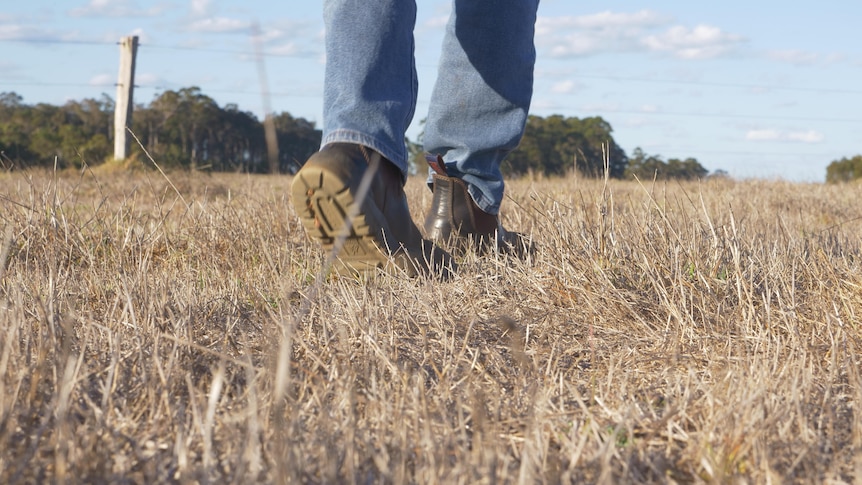
The bushfire risk increases for most states and territories this spring. (ABC News: Tyne Logan)
After historic fires marred Europe's summer, experts are cautioning against complacency ahead of Australia's warm season, with the fire risk increasing in most states and territories over the coming months.
The Australian and New Zealand Council for Fire and Emergency Services (AFAC) has released its latest seasonal outlook, which shows an increased risk of fire in areas across all jurisdictions, except for the ACT, this spring.
The widespread impact is due to dry conditions in the country's east and increased fuel loads through parts of central and northern Australia.
"The variety of risk factors across different regions reinforces the need for communities to understand their local conditions and prepare early," AFAC CEO Rob Webb said.
"While some areas are facing an elevated risk of fire this spring, bushfires can still occur in regions with a normal seasonal outlook."
Increased fuel loads have elevated the fire risk across most of the Northern Territory, despite forecasts suggesting the region could see above-average rainfall in spring.
Rainfall is also expected to be higher than normal for most of Western Australia, but the fire risk is high in some areas due to above-average fuel loads and dry soil conditions.
Below-average rainfall has increased the bushfire risk across large parts of southern Victoria and eastern Tasmania, including Flinders Island.
South-east Queensland, north-eastern New South Wales and north-west South Australia are also looking at an increased chance of fires.
Will El Niño make the fire season worse?
Fears have been growing around what Australia's spring and summer will look like after the weather bureau declared an El Niño in June, which has the potential to become the strongest on record.
El Niño is linked to reduced rainfall, particularly in eastern Australia, and increased temperatures, mainly across the country's south. It often helps load the dice for more extreme fire conditions, and past events have contributed to some of the country's hottest and driest years on record.
But predicting what impact the climate pattern will have on Australia each year is notoriously difficult, because it's just one factor that influences weather conditions. There are other climate drivers, such as the Indian Ocean Dipole (IOD) and Southern Annular Mode (SAM), that contribute.
Local sea surface temperatures and natural weather variability also play a role.
El Niño develops when ocean temperatures in the central Pacific are unusually high. The strength of El Niño, or why some reports have referred to it as a 'super El Niño' this year, merely describes its signal, which so far has been off the charts compared to usual.
[Nino 3.4 index]The last El Niño 2023-24 brought us the warmest winter–spring since records began in 1910, but how it may impact rainfall is less clear.
'Caution against complacency'
While rainfall was above average for parts of northern and central Australia last month, it was unusually dry across much of the country's west and sections of the east.
Temperatures were also warmer than average across most of the country, with that trend expected to continue throughout spring.
Models suggest a positive IOD could emerge before spring, which could exacerbate the impacts of El Niño.
A professor of pyrogeography and fire science at the University of Tasmania, David Bowman, said vegetation growth had been "prolific" in forests recovering from bushfires in 2019-20 and it would not take much for that to dry out.
"There's a lot of water in the landscape, and that's resulted in a lot of productivity, a lot of fuel," he said.
"If we were to go into a summer under this El Niño where we had what we call flash droughts, which is really strong heat waves, we can switch up landscapes into extraordinarily dangerous conditions.
"In eastern Tasmania, there's been a very sustained drying trend; we have had water, but basically it won't take much to nudge landscapes back into a deep drought."
Climate scientists have long warned that fire seasons across Australian states and territories will start earlier and persist longer due to climate change.
Professor Bowman said the extra heat associated with climate change was dangerous when combined with El Niño.
"Plants are very good at controlling their water use, but if you subject them to very strong heating, you can rapidly stress and dry out landscapes and make the landscapes available for high-intensity fires," he said.
"My instinct would be to caution against complacency about particularly forest fires."
Southern hemisphere warnings
Australia's fire season will follow a devastating summer across the northern hemisphere, marred by successive record-breaking heatwaves and extreme wildfires in Europe, the United States and Canada.
Professor Bowman said Australia's differences in climate and geography meant it is not necessarily subject to the same fate, but the events reinforced that fire seasons are worsening.
"We are much more advanced in terms of our capacity, but it also is a very good reminder, particularly what's happening in the US and Canada, who are very advanced in managing fire, that they're seeing fire seasons and fire behaviours that are just simply extraordinary," he said.
"I have every reason to believe that we will see equally extraordinary fires. If it's not this summer, it's certainly going to be in the next [...].
"We're going to see some very intense fire activity."
ABC