Australia Weather News
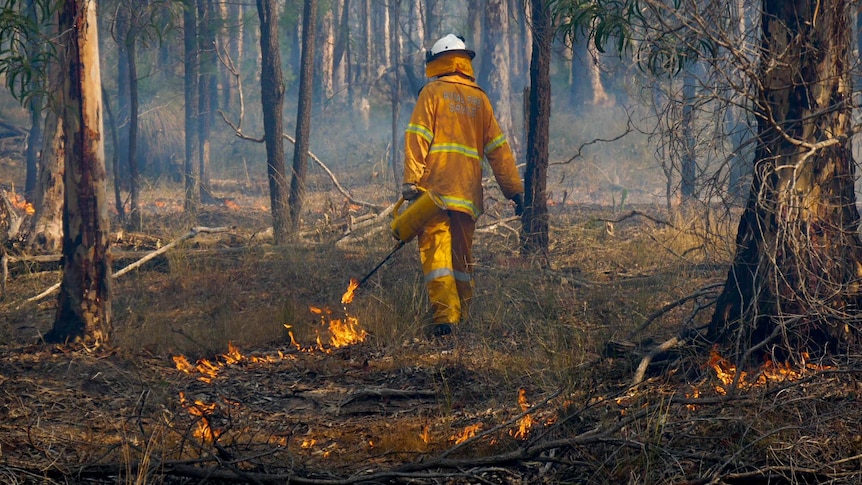
The window is closing for controlled burns in one part of Queensland, but in another it has only just begun. (ABC Southern Qld: Peter Gunders)
A small window to manage fire risk has opened in dry parts of southern Queensland, as the rest of the state works to reduce a large fuel load.
Volunteer firefighter crews have conducted hazard reduction burns near Toowoomba, Kingaroy, St George and Yeppoon over the past two weeks.
Several fires elsewhere in the Southern Downs and Western Downs were brought under control in the past week.
Queensland Rural Fire Service (QRFS) Superintendent Shaune Toohey said anyone doing "hot works", including grinding, slashing or cropping, should take care in windy conditions.
"What we are seeing is when those westerly winds do come through, we are seeing a number of fires occur across the landscape," Mr Toohey said.
He said the country was very dry from the Queensland-New South Wales border to regions including Moonie and Warwick, and further inland towards St George and Bollon.
Bureau of Meteorology senior forecaster Felim Hanniffy said Queensland's south had received very little rain over summer, unlike north Queensland and the Gulf Country.
"A good chunk of this area, particularly the southern interior and the Darling Downs, has seen well below average rainfall so far this year," he said.
"Some of these areas have only seen 20 to 40 per cent of their rainfall for that period."
In the southern interior, Mr Toohey said grass curing and "drought factors" meant volunteer firefighters had a fortnight-long window to get hazard reduction burns done.
"It is very much on a knife edge in terms of once the conditions are lost and that mitigation window closes."
Mr Toohey said crews were reducing fire risk before "frost kicks in and dries that grass further".
Firefighters begin burns, north Qld battles 'significant fuel'
At the Sunshine Coast and hinterlands, residents were issued warnings last week as hazard reduction burns sent smoke drifting towards populated centres.
QRFS Deputy Chief Officer Joel Gordon said there was a "degree of moisture" in vegetation that made it suitable to burn, but it had created more smoke.
"It is also a combination of the winds — we are always looking to burn areas along the Sunshine Coast with slightly elevated humidity," he said.
"As a result, they tend to blanket the community a little more with smoke."
In the state's north, QRFS Manager of Bushfire Mitigation Anita Dwyer said "significant fuel loads" from a good rain season were beginning to dry out.
"What we can expect is average fire conditions to return over the autumn months as we move into winter," she said.
"Now is the best time for landholders to start preparing for their heightened fire risk period."
Firefighting resources rolled out
In the sheep and cattle town of Yaraka, the local rural fire brigade has received the keys to its first new firefighting vehicle in 25 years.
Gregory MP Sean Dillon said the new dual-cab, which was fitted with an electric water pump and two-way radios, was part of a state-wide rollout.
"Primary producer brigades and small rural fire brigades usually have to make do with their own equipment, equipment in cases they already fund."
"We're very keen to turn that around," he said.
Rural brigades in Condamine, The Ridge and Kogan in Queensland's south also received new vehicles this month.
The Queensland Fire Department has previously faced criticism for rolling out medium attack trucks that firefighters say did not meet basic safety requirements.
ABC