Australia Weather News
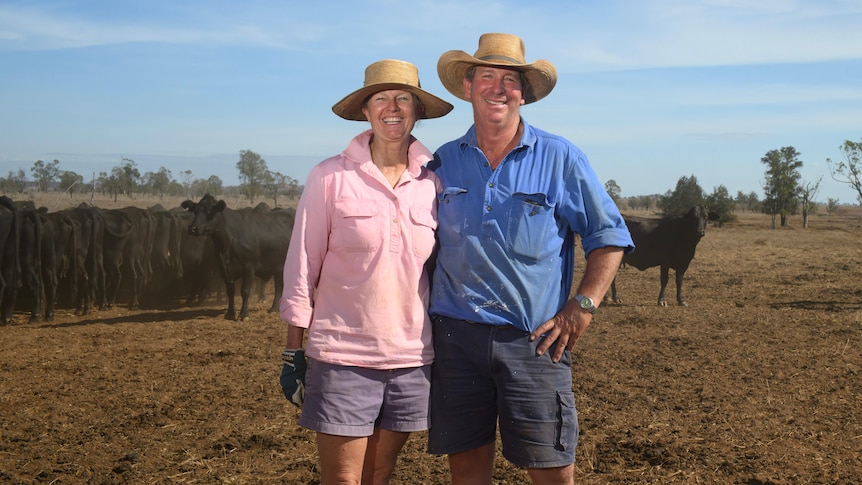
Nat and James Stinson with their cattle just before the rain arrived. (ABC Rural: Brandon Long)
After months of dust storms and bare paddocks, rain has finally delivered relief to farmers across some of Queensland's driest regions.
At Mount Abundance, near Roma, cattle producers James and Nat Stinson had been scanning the horizon for months, hoping for a break in the weather.
Since December, their property had received almost no meaningful rainfall, forcing the couple to sell down livestock to ease pressure on exhausted pastures.
In the past few days, the showers finally arrived.
"We're certainly pleased to see the rain and to see the ground wet and the puddles grow," Mr Stinson said, after up to 50 millimetres fell across the property from Friday to Monday.
Just days earlier, the Stinsons had described a landscape with "absolutely no life whatsoever" in what should be the peak of the grass-growing season.
"We're hand-feeding cattle, which is a bit of a rarity for us at this time of the year," Mr Stinson said at the time.
In 2025, the property recorded 370mm of rain, well short of its annual average of about 520mm.
The memory of the crippling 2019 drought prompted the Stinsons to invest in preparation, building silos and bunkers to store grain and fodder in the years that followed, but preparation can only go so far.
"We're all set up and then to have this dry at this time of the year … it's frustrating," he said.
When storms finally rolled through late last week, the mood shifted.
"It's been a really good event and hopefully we won't have to feed for too much longer," Mr Stinson said.
The rainfall has already reshaped their plans, with bare paddocks to be rested to encourage fresh growth and winter oats to be planted for calves.
While "you never knock rain back", Mr Stinson estimates another 100mm will be needed to properly turn the season around.
It was a few days of striking contrasts for farmers across the state, as rainfall totals varied dramatically from region to region.
Communities such as Taroom recorded 207mm between Friday and Monday.
Parched areas around Mitchell and Injune also benefited, with falls exceeding 60mm.
Further south, however, totals were more modest. Surat recorded 36mm, St George 31mm and Dirranbandi just 11mm over the same period.
Wet to dry and back again
At Thargomindah, sheep and cattle producers Anthony and Gerda Glasson had also been waiting for relief.
Record flooding in early 2025 sent water through homes and businesses in town, but once the floodwaters receded, the landscape dried out with surprising speed.
Finally, on Thursday, the rain started.
"We had a massive storm come straight up the middle of the property," Mr Glasson said.
"There was 115mm at the house and one gauge out to the west of the house actually received 144mm and that all fell in three hours."
January's heat was relentless, with hot winds stripping moisture from the ground and shrinking dams.
Keeping livestock watered became "a full-time job keeping an eye on water", Mr Glasson said.
"We were just starting to really look down the barrel in the next month or two, doing quite significant destocking," he said.
While the pressure has eased, the Glassons know others are still waiting.
"It's a really good start," Mr Glasson said.
"We've been one of the lucky ones, but there is still a lot of dry spots out there."
ABC