Australia Weather News
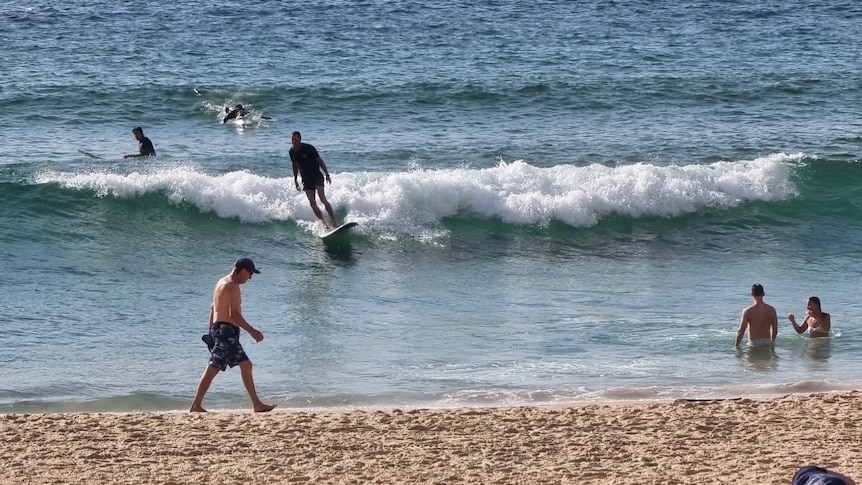
Beachgoers at Bondi cool off in the summer heat. (ABC News: Mario Conti)
Large parts of Australia, from Western Australia to Tasmania, have been issued with severe to extreme heatwave warnings until Saturday.
In Victoria and South Australia, firefighters are bracing for challenging conditions with some areas expecting consecutive days of temperatures in the mid-40s.
Severe heatwaves can be dangerous for many people, especially older people, babies, children, pregnant and breastfeeding women, people with medical conditions and people who are unwell.
Here's how you can look after yourself and others over the next few days.
When do temperatures become dangerous?
Temperatures above 32 degrees Celsius can be considered dangerous for a person if the humidity is high.
In dry heat, temperatures of above 40 degrees can pose a significant health risk.
For many of the areas in Australia where the heatwave is forecast, humidity will be low.
However, for days there will be temperatures above 40 degrees, and nights in SA, Victoria and NSW are expected to be muggy.
Recent world-first human studies suggest the deadly threshold for a person's ability to cope in heat is much lower than previously believed, even for healthy young people.
This is measured by a wet-bulb temperature.
It's a measure that combines the two factors — how hot the air is and humidity — that make heat dangerous to people.
The name comes from the temperature a thermometer would read if its bulb were wrapped in a wet cloth — cooling the thermometer the same way sweat cools a person.
But a thermometer wrapped in a wet cloth will show 35C under many different combinations of temperature and humidity.
That is because lower humidity means more evaporation, bringing the thermometer temperature down.
On days when the air temperature is hotter than 35C, you still might be OK if the humidity is low enough.
Why is it dangerous?
When it is humid, the air is so moist that sweat cannot easily evaporate, meaning your body will struggle to cool down.
Sweat is important in cooling the body down.
Rising wet-bulb temperatures can increase heat-related deaths and create uninhabitable areas, a significant climate concern.
If the body cannot cool down, heat illness and even death can happen.
In dry heat, the body can actually max out and stop producing sweat altogether.
This is also extremely dangerous.
From a core body temperature of 39C, mild heat exhaustion, such as headaches and faintness, can begin to occur.
Once the body's core temperature rises to 40C, vomiting and disorientation can become more likely.
At a core temperature of up to 43C, death is very likely.
When should I call Triple Zero?
Heat stroke is a medical emergency, and you should act quickly.
Call Triple Zero (000) immediately if someone shows signs of heat stroke, including:
Who is most at risk from heat death/ illness?
While elderly and young children are typically most at risk, the Royal College of Australian General Practitioners (RACGP) warns that even young, fit and healthy people shouldn't underestimate the conditions this week.
"As Australians, we're accustomed to hot weather. However, we must not underestimate the serious health effects that can occur — even for young and healthy people," RACGP president Michael Wright says.
However, the risk of hospitalisation increases with age.
"Almost one-third of hospitalisations relating to extreme heat occur in people aged 65 and over," Dr Wright said.
"Keep in mind, though, that it's not only older patients who can experience severe health issues when temperatures rise. If someone cannot seek reprieve from soaring temperatures, this can place an enormous strain on their body."
"So, please spread the word to people in your life — stay cool, stay hydrated and stay indoors if you can."
How do I stay cool?
The Bureau of Meteorology says Australians in areas with heatwave warnings should seek a place to keep cool, such as your home, a library, a community centre or a shopping centre.
Close your windows and draw blinds, curtains or awnings early in the day to keep the heat out of your home.
If available, use fans or air-conditioners to keep cool.
New South Wales ambulance service says you should:
Should I be exercising?
Doctors advise people to avoid exercising during the hottest part of the day, particularly outside.
It is also important to stay hydrated and drink more water than usual when temperatures soar.
"My advice for all Australians is to drink plenty of water, try to stay indoors if possible during those peak UV hours of 11am to 3pm, and remember to 'slip, slop, slap,'" Dr Wright said.
The University of Sydney has this tool, which gives advice for exercising depending on the temperature in your location.
ABC